Study
Human Rights, International Humanitarian Law and Moral Injury: A Role for Or LeGoyim at the United Nations ECOSOC
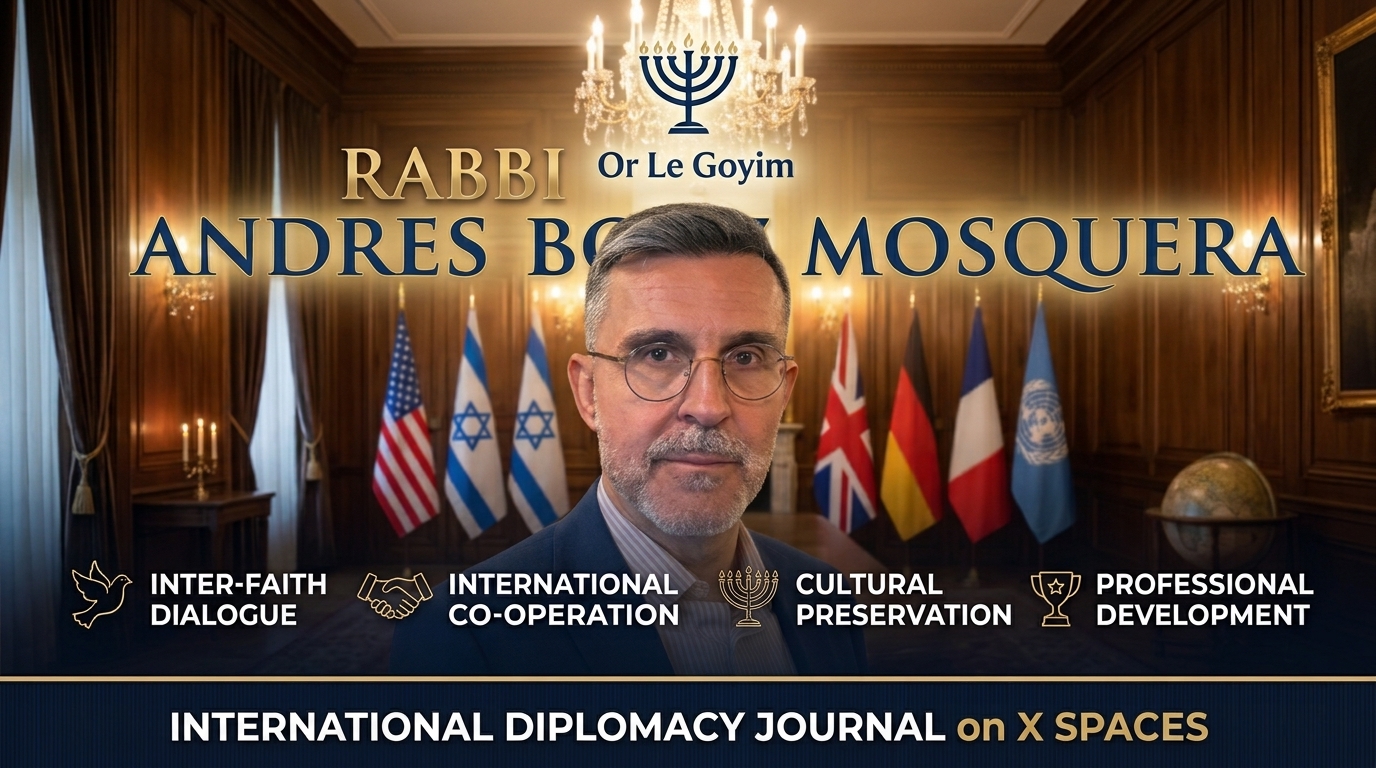
Rabbi Andres Boaz Munoz-Mosquera
Or LeGoyim Global Engagement and Sustainment Operations has an opportunity to develop a specific contribution to the work of the United Nations by bringing international human rights law, international humanitarian law and the consequences of armed conflict into a single program of research and policy engagement on societal moral injury. I propose that this work be developed through ECOSOC, with particular attention to humanitarian affairs and, where appropriate, the UN Human Rights Council.
International human rights law and international humanitarian law establish obligations for the protection of human dignity. Yet violations continue, and the legal principles intended to protect civilians do not always translate into effective institutional action. There is a need for careful analysis of how these obligations are applied, how alleged violations are assessed, and what can be done to improve compliance. There is also a need to examine the consequences that violations leave behind, not only for individual victims but for the communities and institutions that must deal with their aftermath and societal moral injury.
An international law program with a practical purpose
Or LeGoyim could begin by producing initiative on selected questions of international human rights law and international humanitarian law. Topics might include the protection of civilians in armed conflict, the treatment of persons affected by conflict, humanitarian access, the investigation of alleged violations, and the responsibilities of institutions under applicable international law.
These initiative and questions should do more than restate legal principles. They should examine particular problems, explain the relevant legal obligations, assess the available evidence and identify shortcomings in implementation. The objective would be to offer recommendations that are useful to humanitarian organizations, policymakers and civil-society representatives working within the UN system.
This work could draw on experience from international military legal practice, where legal obligations must be translated into decisions made under demanding operational conditions. It could also address international judicial proceedings, including cases before the International Court of Justice, with careful attention to evidentiary standards and the distinction between provisional measures and final judgments.
The purpose would not be to promote a predetermined position on a particular conflict. It would be to contribute independent analysis and distinguishing established facts from allegations and legal conclusions from political arguments.
Bringing moral injury into the discussion
I believe the initiative could make a further contribution by examining the relationship between violations of international law and moral injury.
My research on epistemic moral injury concerns the relationship between knowledge, uncertainty and moral responsibility. My work as a rabbi chaplain has brought these questions into a practical setting. People affected by conflict may struggle with what they witnessed, what they knew, what they could have done and whether the institutions they trusted fulfilled their responsibilities. These questions arise among service members and veterans, but also among civilians, humanitarian workers and others exposed to violence or institutional betrayal.
This research raises a broader question that deserves attention in the aftermath of conflict: what happens to a society when its institutions, leaders or communities fail to uphold the values they claim to represent?
I use the term societal moral injury to explore the collective consequences of atrocities, institutional betrayal, complicity and the failure to acknowledge wrongdoing. These experiences may erode trust, deepen divisions and complicate the process of rebuilding relationships after violence. The concept needs further theoretical and empirical investigation; it should not be treated as an established clinical diagnosis. Its value lies in opening a research question about the moral and social consequences of violations of fundamental rights.
For Or LeGoyim, this could become a distinctive area of work. The program would examine how legal accountability, acknowledgment of wrongdoing and support for affected communities relate to longer-term recovery. It would not confuse moral repair with legal accountability, or suggest that reconciliation can replace the determination of responsibility. Rather, it would consider how both are necessary to understand the full consequences of conflict.
A contribution worth developing
The value of this initiative would lie in connecting questions that are often considered separately. International human rights law and international humanitarian law establish the obligations; legal analysis examines whether those obligations have been respected; and research on moral injury addresses some of the consequences when individuals and institutions fail to uphold them.
Or LeGoyim could use its international engagement program to bring these questions into the UN discussion in a sustained and practical way. The aim would be to contribute to civilian protection, improve understanding of institutional responsibility, and examine what individuals and communities need after suffering the consequences of conflict.
The broader proposition is that the protection of human dignity requires more than legal rules on paper. It requires effective implementation, serious attention to violations, and a willingness to confront the moral consequences of institutional failure. Bringing these elements together would give Or LeGoyim a clear subject on which to develop research, establish partnerships and make a substantive contribution to international policy discussions.